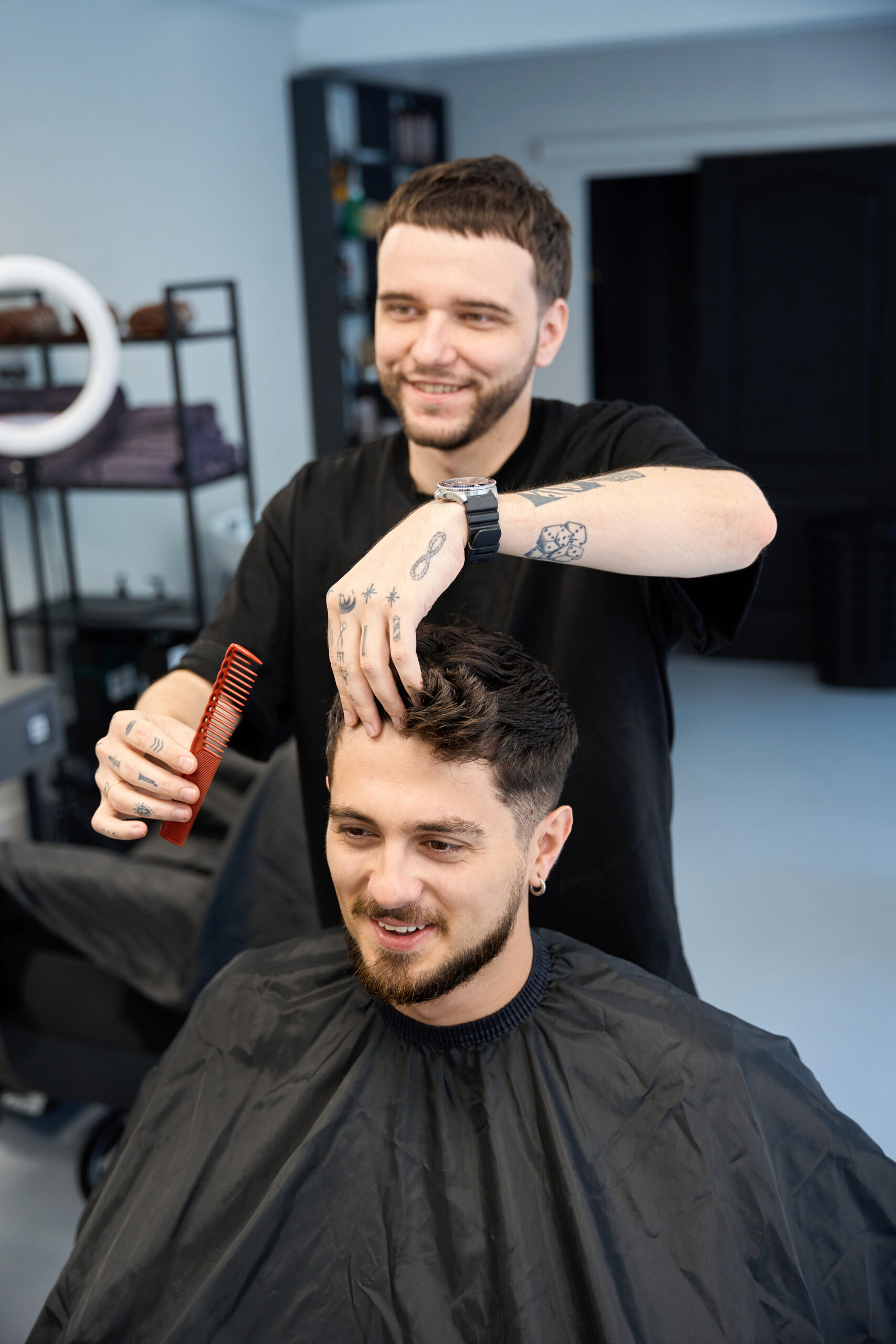
A barber can use your face shape to help narrow down hairstyles that are likely to suit you, but it should never be the only factor.
Your forehead, jawline, hairline, hair texture, density and daily routine all matter. The aim is not to match you to a fixed chart. It is to find a style that improves balance, works with your natural hair and is realistic to maintain.
Face Shape Helps Guide the Overall Structure
Face shape is useful because it gives the barber a starting point for deciding where to keep or remove length.
The main areas to look at are the width of the forehead, cheekbones and jaw, along with the overall length of the face.
A rounder face may benefit from more height on top and less bulk through the sides. Those with a longer face would be better off with a cut that doesn’t add too much extra height. A square face is generally able to cope with more defined shapes, whereas oval faces tend to suit a wider variety of styles.
These are general guides rather than strict rules.
Two men with the same face shape may still need different cuts because their hairlines, textures, and densities differ.
Different Face Shapes Usually Need Different Balance
The main job of the haircut is to create balance.
For a round face, the barber may keep the sides cleaner and create more structure through the top. This can make the face appear longer and more defined.
For a square face, shorter sides and a structured top can work well with a strong jawline. The barber may also keep the finish clean rather than add unnecessary bulk.
Oval faces are usually more flexible. The main consideration is often maintaining proportion and avoiding styles that make the face look unnecessarily long.
Heart and diamond-shaped faces can benefit from keeping some width through the fringe or upper sides, according to the position of the hairline and the structure of the cheekbones.
For rectangular or oblong faces, excessive height at the top can exaggerate the length. A more balanced shape with controlled volume may work better.
The important point is not the label itself. It is understanding how the haircut changes the way the face looks.
Hairline and Growth Direction Can Change the Plan
A hairstyle that suits the face still needs to work with the hairline.
A higher forehead, receding temples or a strong front growth pattern can all affect the final choice.
For example, pushing the hair straight back may expose more of the hairline. A textured front or side direction can sometimes create a more balanced result.
Cowlicks and strong growth patterns matter too.
If the front naturally pushes to one side, forcing it the opposite way can make the style harder to control. The barber may be better off working with the natural direction rather than fighting it.
This is one reason face shape advice should always be combined with an assessment of how the hair actually grows.
Hair Texture and Density Affect What Is Realistic
Hair type plays a major role in whether a style will work.
Straight hair tends to display sharper lines and more clearly reveals structure, while wavy hair shows more movement; curly hair usually alters its shape when length is taken away.
Density also matters.
Thick hair may need weight taken out in certain areas so the shape does not become too heavy. Fine hair may need more structure left in place to avoid looking flat.
A style that looks good in a reference photo may need to be adjusted if the person in the image has completely different hair.
That is why a good barber should look at both the face and the hair before recommending a direction.
Beard Shape Can Change the Balance Too
Facial hair affects the overall proportions of the face.
A fuller beard can add width or weight through the lower part of the face. More length through the chin can make the face appear longer. A shorter beard or clean shave exposes more of the jawline.
That means the beard should be considered with the haircut, not separately.
For example, a man with a longer face may not want extra height through the hair and extra length through the beard at the same time. Someone with a wider face may prefer a beard shape that keeps the sides tighter.
The right balance depends on the overall look, not on a single feature in isolation.
Your Daily Routine Should Decide the Final Option
A hairstyle only works if you are willing to maintain it.
Some cuts need daily blow-drying, styling products, and more regular visits. Others are easier to wear with minimal effort.
This should be part of the conversation before the cut starts.
If you only want to spend a few minutes on your hair in the morning, the barber should work within that. If you are comfortable styling your hair every day, you may have more flexibility with volume, direction and length.
It is also worth mentioning whether you regularly wear a hat or helmet, work in an environment where your hair needs to stay neat, or prefer longer gaps between appointments.
The best style is one that suits both your face and your routine.
Reference Photos Help, but They Need to Be Adapted
Reference photos are useful when they show the direction you want.
They can help explain the length, shape, fade or finish you have in mind more clearly than words alone.
But the barber should not copy the image without adjustment.
The person in the photo may have a different face shape, hairline, density or texture. The useful approach is to take the parts you like and adapt them to your own features.
That creates a more realistic result and usually makes the haircut easier to maintain.
Choosing a Hairstyle With a Barber in Prahran
If you are unsure what will suit you, you do not need to know your exact face shape before the appointment.
Alpha Omega Men’s Grooming in Prahran offers men’s haircuts, scissor cuts, and restyles, where face shape, hairline, hair type, and styling preferences can be considered together.
If you are maintaining your current look, a regular haircut may be enough. If you are making a bigger change to length, shape or direction, a restyle may be the better option.
Bring a reference photo if you have one, explain what you like about it and be clear about how much styling you want to do at home.
The goal is simple: a haircut that suits your face, works with your hair and is practical to maintain.